

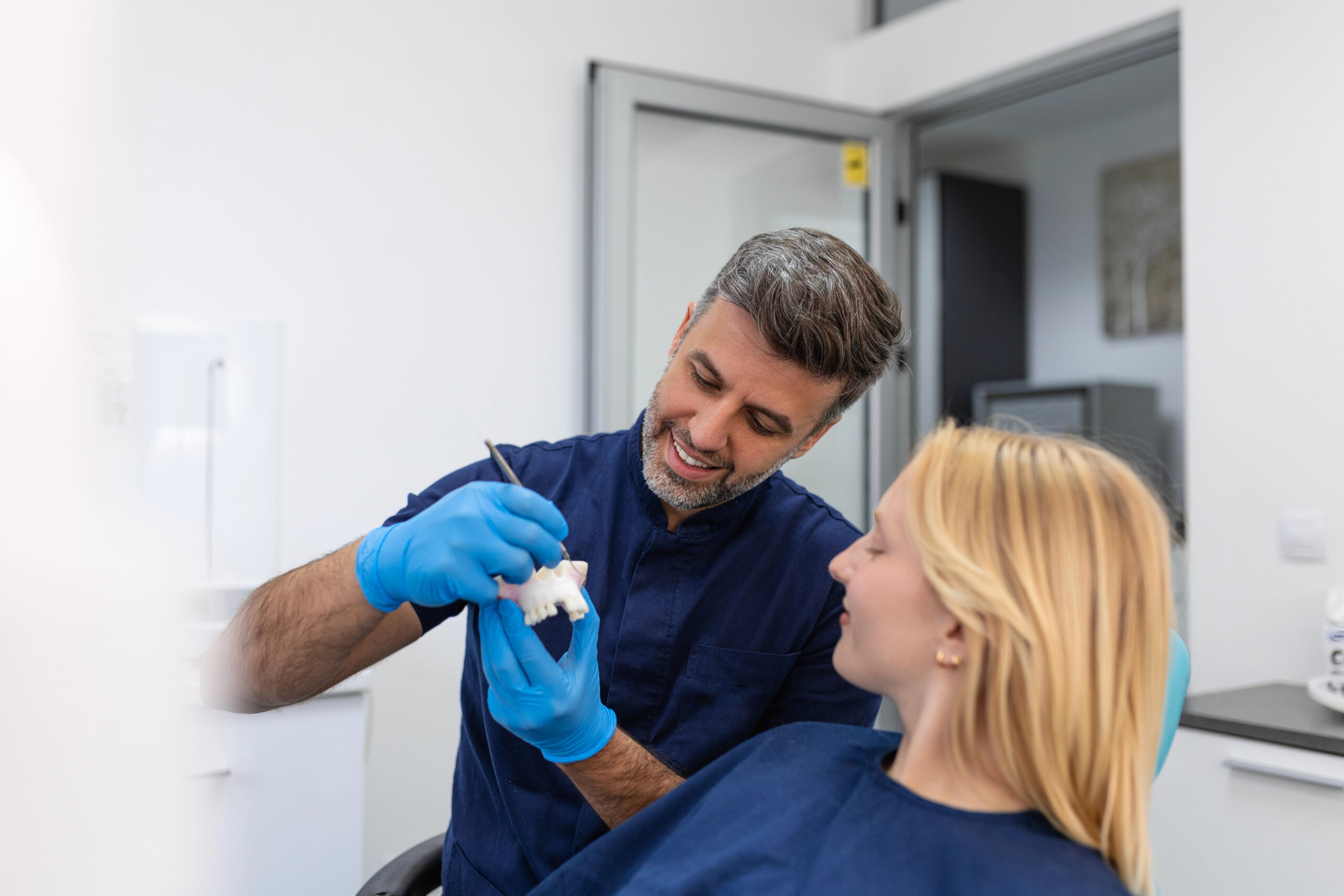
A denture that rubs during meals or shifts while speaking can turn ordinary activities into frustrating experiences. Some adjustment is expected with a new appliance, but persistent soreness should not be accepted as unavoidable. For patients experiencing denture discomfort in Littleton, CO, understanding changes in fit helps distinguish an adaptation period from a problem that needs professional attention.
Why Can Dentures Feel Uncomfortable?
New appliances require an adaptation period
A new denture changes how your tongue, cheeks, and lips move during eating and speaking. Mild awkwardness or increased saliva may occur while these muscles adapt. That matters because unfamiliar sensations do not always mean the appliance was made incorrectly.
Localized pressure or rubbing can still require an adjustment. A small area may carry more force than surrounding tissue, especially during chewing. Follow-up care allows the dentist to assess these spots rather than expecting the mouth to tolerate ongoing irritation.
Changes in the mouth can alter an older denture
Your gums and underlying bone can change after teeth are lost, so a denture that once fit comfortably may become less stable. Wear or damage to the appliance can also affect its function. A change in fit is not always solved by adding more adhesive.
Partial dentures also depend on your remaining natural teeth and the surrounding tissues. A clasp, support area, or change in a supporting tooth may influence comfort. Because these factors differ from complete-denture support, the assessment should match the type of appliance.
Which Signs Suggest the Fit Needs Review?
Repeated sore spots or changes during chewing
A sore area that returns whenever the denture is worn may indicate pressure or rubbing. Rocking, clicking, or a new difficulty chewing may also suggest a fit or bite issue. Continuing to compensate by chewing differently can make meals more difficult without addressing the cause.
Record where your discomfort occurs and whether it starts immediately or builds during the day. Also note whether the problem appeared after dropping your denture or after dental treatment. These details help the dentist identify changes that may not be obvious during a brief inspection.
Adhesive needs can provide useful clues
A small amount of adhesive may be appropriate for some well-fitting dentures when used as directed. If you need progressively larger amounts, however, the fit may need review. Adhesive does not rebuild worn surfaces or correct a broken appliance.
Discomfort is not always caused by fit alone. Inflammation, dry mouth, infection, or an unrelated tissue lesion can contribute. That is why the tissues beneath a denture need examination even when the appliance itself appears intact.
How Is Denture Discomfort Assessed in Littleton?
The appliance and tissues are evaluated together
The dentist may check pressure areas, the denture edges, how the teeth meet, and movement during function. The gums and other oral tissues are examined as well. Looking at both sides of the problem helps distinguish a mechanical issue from a tissue condition.
For your partial denture, remaining teeth and clasps may need particular attention. For an implant-retained denture, attachments and the surrounding tissues may also be assessed. Different support systems create different maintenance needs, so one adjustment method does not suit every appliance.
Bring information about your denture age, cleaning products, wear schedule, and any recent repairs. Mention discomfort that occurs without the appliance in place. These details matter because a sore tissue area may need a different approach than a denture edge that rubs.
Ask the office whether to wear the denture before the appointment so irritated areas can be evaluated. Severe soreness is not a reason to force prolonged wear. Individual instructions are preferable to enduring significant pain simply to make a pressure mark visible.
A sore or ulcer that does not heal within about two weeks needs evaluation, even if it seems related to a denture. Swelling, fever, spreading redness, or inability to eat or drink also warrants prompt assessment. Difficulty breathing or swallowing requires emergency medical attention.
What May Improve Denture Comfort?
Adjustment, relining, and replacement have different roles
A targeted adjustment may help when a specific edge or pressure area is responsible. A reline changes the tissue-facing surface to improve adaptation when appropriate. Replacement may be considered if wear, damage, or other limitations prevent a satisfactory result with smaller changes.
These are possible approaches rather than a recommendation for every loose denture. The condition of the mouth and appliance determines which option is reasonable. Some problems require treatment of the tissues first, because modifying the denture alone would leave the underlying concern unresolved.
Home filing, bending clasps, or repairing a denture with household glue can damage the appliance and introduce unsafe materials. Even a small alteration can change support elsewhere. A professional assessment is safer than an improvised repair that makes the fit harder to restore.
Cleaning your appliance each day helps remove debris and bacterial buildup. A denture-specific cleanser and soft brush are generally preferable to abrasive toothpaste. Follow the product and dentist instructions because cleaning methods can vary with the materials and attachments present.
Very hot water can distort some denture materials. When handling the appliance, a towel or water-filled basin can reduce damage if it slips. These habits support maintenance, but they do not correct a denture that has already developed an uncomfortable fit.
For most removable dentures, overnight removal allows the tissues to rest, unless the dentist gives different instructions during a particular healing period. Clean your gums, tongue, and any remaining teeth too. Plaque control remains important even when no natural teeth remain.
Soft foods and smaller bites may help during adaptation, with chewing distributed as instructed rather than concentrated on one side. Progress should match comfort and clinical advice. Ongoing soreness should lead to review rather than an indefinite diet restricted by an unstable denture.
Frequently Asked Questions About Denture Discomfort
Should a new denture hurt until the mouth gets used to it?
Mild awkwardness can occur, but persistent pain or repeated sore spots should be assessed. Adaptation and excessive pressure are not the same problem. Follow-up adjustments may be needed to improve comfort without forcing injured tissues to tolerate the appliance.
Can denture adhesive replace an adjustment?
No. Adhesive may help selected patients when used as directed, but it cannot correct every fit problem. Increasing dependence on it or continued movement during meals is a reason to have the denture and supporting tissues reviewed.
Is it safe to sleep with dentures in place?
Most removable dentures should be taken out overnight, although immediate post-treatment instructions may differ. The dentist should explain the appropriate wear schedule. Tissue rest and daily cleaning are important parts of maintaining a healthy mouth beneath an appliance.
Do dentures eliminate the need for dental checkups?
No. Visits allow examination of oral tissues, remaining teeth, appliance condition, and changes in fit. A denture can become less suitable as the mouth changes, so comfortable function today does not remove the need for ongoing assessment.
How Rocky View Family Dental and Implant Center Can Help
Rocky View Family Dental and Implant Center offers full, partial, and implant-retained dentures in Littleton. Dr. Walt Vogl, DDS, can assess denture comfort and discuss whether the fit, supporting tissues, or appliance condition needs further attention.
Visit the practice website to learn about denture treatment options, and explore the dental blog for related information. To arrange a visit, use the contact page or call 303-797-6129. The office is at 1 W Dry Creek Cir, Littleton, CO 80120.