

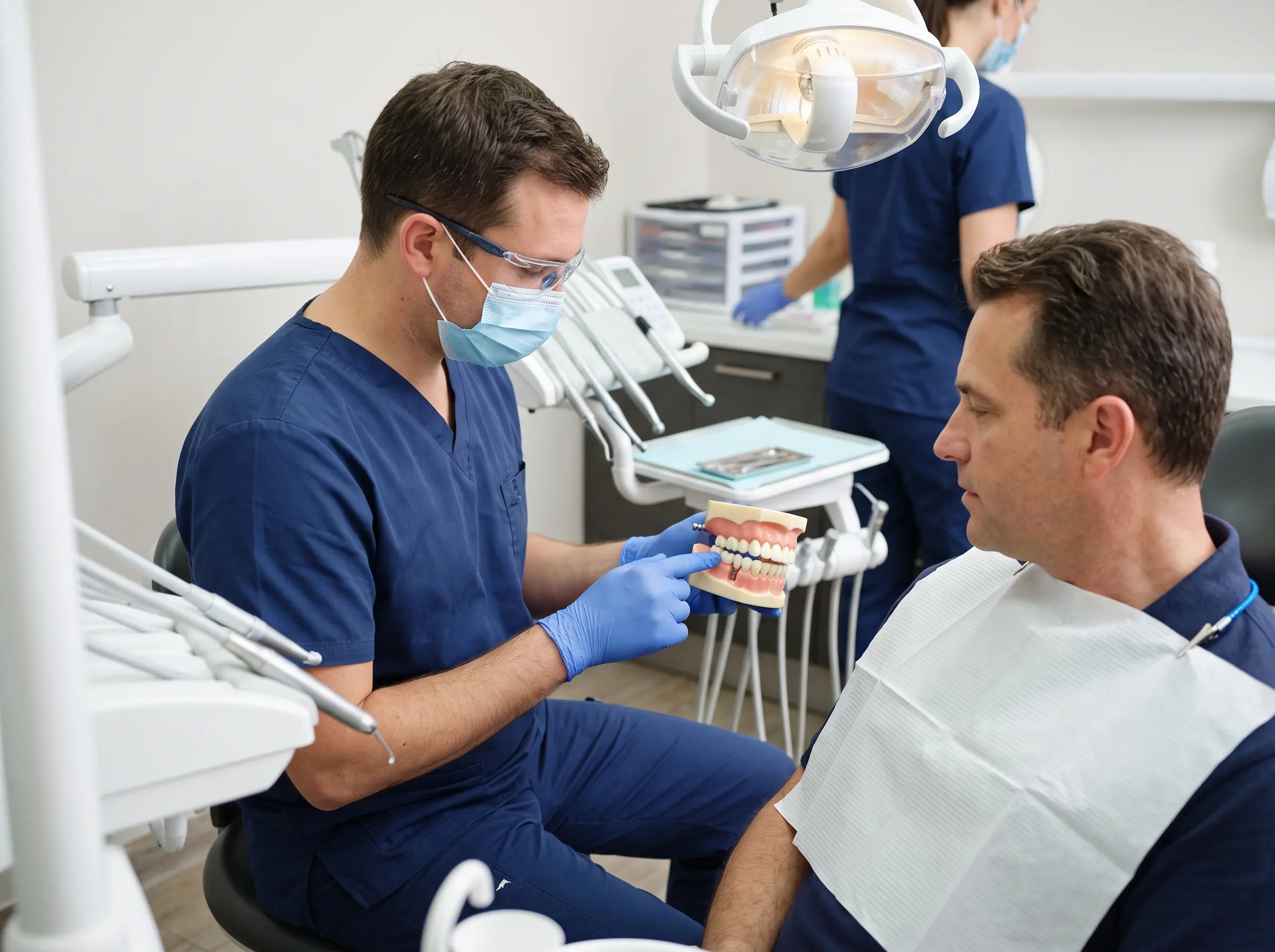
Custom Dental Crowns and Bridges in Littleton, CO
Effective Solutions for Damaged or Missing Teeth
Dental Crowns
Often called a "cap," a crown is custom-crafted to completely cover and protect a weakened, cracked, or root-canal-treated tooth. It restores the tooth's shape, size, and strength while blending seamlessly with your natural smile.
Dental Bridges
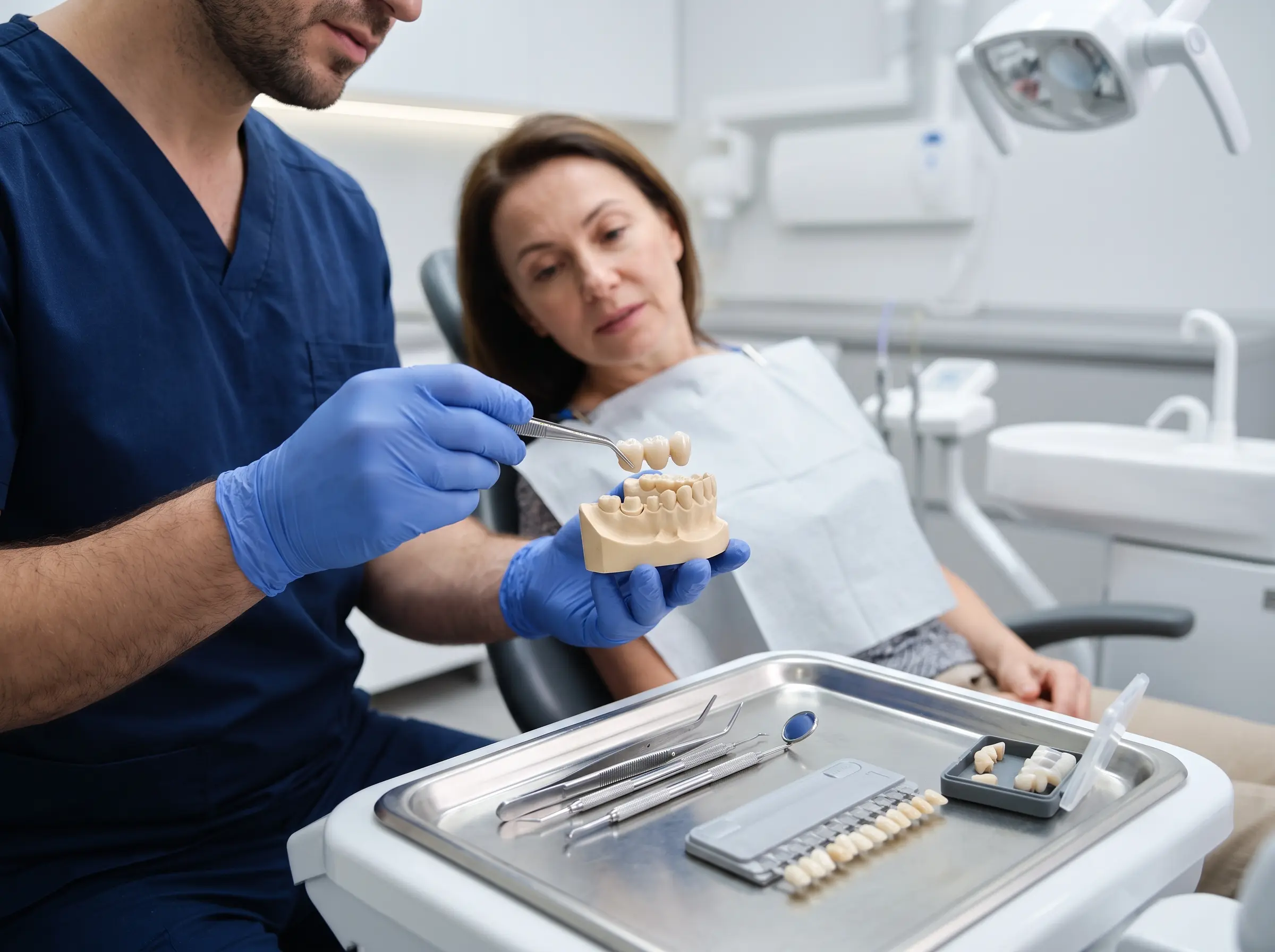
A bridge "bridges the gap" created by one or more missing teeth. It consists of custom replacement teeth anchored securely in place by crowns attached to your adjacent healthy teeth or supported by Dental Implants.
Types of Crowns and Bridges We Offer
Crowns
Porcelain Crowns
These types of crowns are known for mimicking the natural look of your teeth. They’re both functional and aesthetically pleasing.
Gold Crowns
Durable and long-lasting, gold crowns are perfect for teeth that endure high biting forces, like molars.
Porcelain Fused-to-Metal Crowns (PFM)
These crowns combine the natural appearance of porcelain with the strength of a metal core.
Zirconia Crowns
These advanced crowns are an excellent choice for many patients because they are known for being both strong and beautiful.
Ceramic Crowns
Metal-free and highly biocompatible, ceramic crowns are ideal for patients with metal sensitivities.
Bridges
Traditional Fixed Bridges
The most common type, anchored by crowns on the healthy teeth adjacent to the gap.
Cantilever Bridges
Used when there’s only one tooth available to support the bridge.
Maryland Bonded Bridges
These are minimally invasive bridges that rely on a durable metal or porcelain framework bonded to existing teeth.
What to Expect: Getting Your Crown or Bridge
Step 1: Comprehensive Consultation
Dr. Vogl will examine your mouth, take precise digital X-rays, and recommend the best restorative option. If a tooth cannot be saved, we may discuss an extraction via our Oral Surgery services first.
Step 2: Gentle Preparation
The affected teeth are carefully and precisely contoured to ensure a perfect, snug fit for your new restoration. We utilize advanced local anesthesia to guarantee a highly comfortable experience.
Step 3: Digital Impressions
We take precise digital scans of your teeth to custom-craft a restoration that perfectly aligns with your bite. A temporary crown or bridge is placed while your permanent one is masterfully fabricated.
Step 4: Final Placement
Once your custom restoration is ready, we securely bond it into place, making any final adjustments so you leave our office with a comfortable, fully functional smile.